Selling Honey, Candles, and Small Joys: How to Actually Sell at a Farmer’s Market
The scene in the photo already tells you half the story better than any handbook could. A folding table pushed right up against the sidewalk, baskets of hand-rolled beeswax candles laid out like something between ritual objects and breadsticks, jars of honey glowing amber in the cold daylight, popcorn sealed in clear tubs, maple syrup bottles lined up with their neat black caps. Behind the table, a refrigerated truck hums quietly, not glamorous but practical, while bare winter trees frame the whole thing with that early-season farmer’s market feeling where spring hasn’t quite committed yet. One customer stands there, scarf wrapped tight, thinking hard, hand near his mouth, weighing impulse against restraint. The vendor reaches out mid-motion, already in the rhythm of offering, explaining, nudging. This is exactly what selling at a farmer’s market looks like in real life: informal, slightly chaotic, deeply human, and very much about presence.
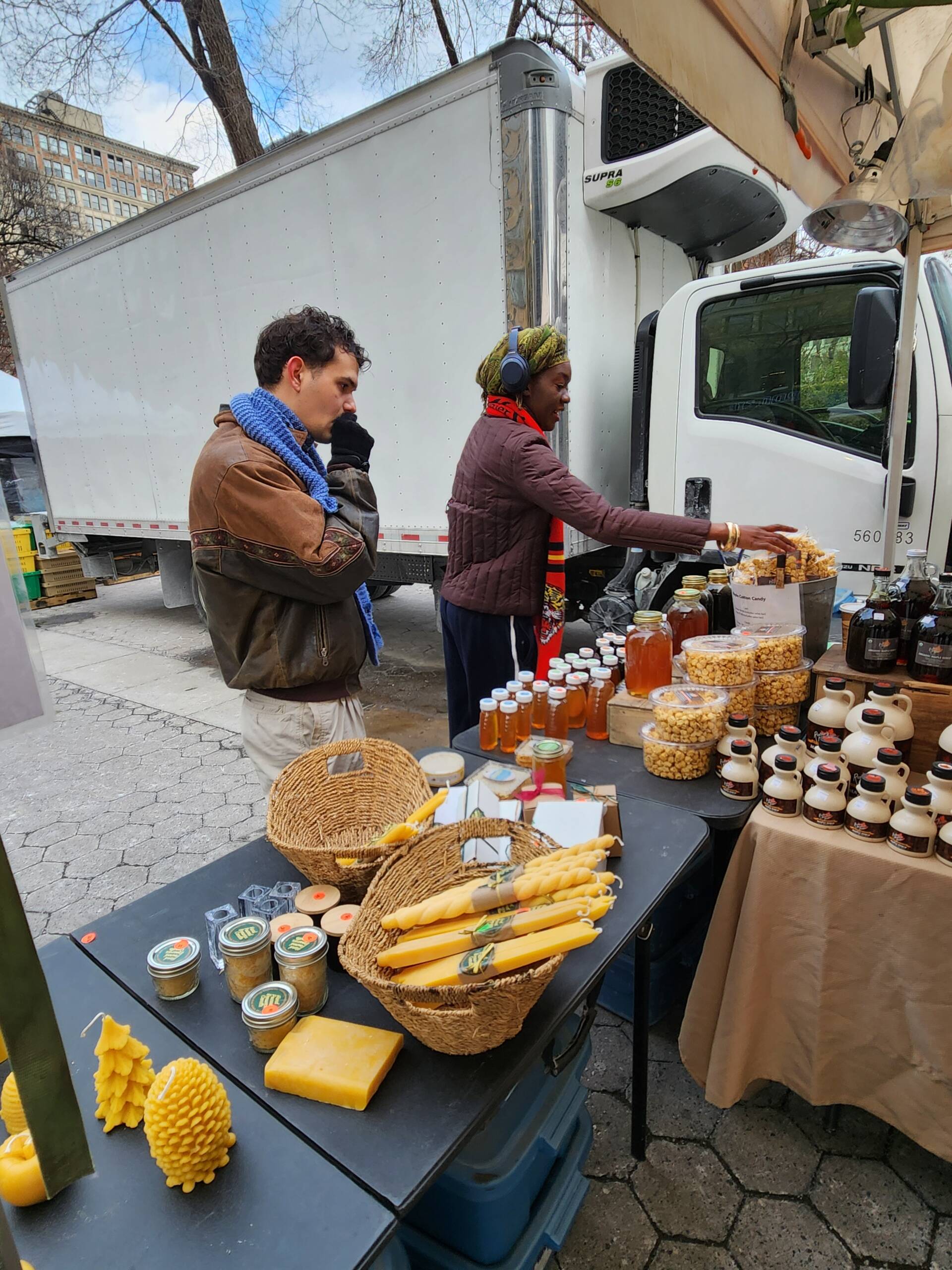
The real side hustle art is that you’re not just selling products, you’re selling trust in a temporary space. People come to farmer’s markets expecting authenticity, but they still need to be convinced, gently, in under thirty seconds. Your table does most of that work before you ever speak. Natural materials help more than people admit; baskets, cloth table covers, wood crates, anything that signals “this came from hands, not a warehouse.” In the photo, the beeswax candles are doing silent marketing just by existing in those woven baskets, their color screaming real, unfiltered wax. Labels matter too, but they don’t need to shout. Clear, legible, honest labels beat clever branding every time in this context. If someone has to ask what something is or how much it costs, you’ve already added friction.
Then there’s the conversation, which is where most new sellers either freeze or oversell. The sweet spot is somewhere between “hovering” and “disappearing.” A simple greeting, a short offer of help, and then space. People like to browse with their eyes and hands before their wallets get involved. When they do ask a question, that’s your opening, not for a pitch, but for a story. Where the honey comes from, why the candles are twisted that way, how long a jar lasts, what you personally use at home. None of this has to be polished. In fact, the slightly imperfect explanation, the small pause while you think, the offhand aside, all of that reads as real, and real is currency at a farmer’s market.
Pricing is another quiet art. You want round numbers, easy math, and no visible hesitation when someone asks. If you sound unsure about your own prices, buyers will mirror that doubt instantly. Bundle options help a lot, especially with consumables. A jar plus a candle, three small bottles instead of one large, something that makes the buyer feel clever rather than upsold. And yes, someone will say they can get it cheaper elsewhere. Let that go. You’re not competing with supermarkets; you’re competing with memory and mood.
Finally, logistics and stamina matter more than most people expect. You are on your feet, talking, smiling, answering the same question again and again, often in bad weather. Bring water, snacks, a way to sit briefly without vanishing behind the table. Cash and card should both work without drama. Your setup should be repeatable and quick to pack, because the romance wears thin fast when teardown turns into a wrestling match. But if you get it right, even a modest day feels oddly satisfying. You didn’t just sell honey or candles. You created a small, temporary shop in public space, connected with strangers, and walked away lighter than you arrived, in more ways than one.