Concept: A Digital Gateway to the Glory of Rome
AncientRome.org stands as a digital gateway to one of history’s most influential civilizations. The website is envisioned as a comprehensive resource, meticulously curated to offer an immersive journey into the heart of Ancient Rome. It serves scholars, history enthusiasts, educators, and casual visitors alike, providing an extensive array of content that brings to life the grandeur and complexity of Roman civilization.
The homepage of AncientRome.org welcomes visitors with a striking visual of the Colosseum under a sunlit sky, immediately transporting them to the ancient city. The design is both elegant and functional, with a layout that mirrors the structured yet expansive nature of Roman architecture. The navigation bar at the top offers quick access to various sections, ensuring users can easily explore the site’s wealth of information.
One of the key features of AncientRome.org is its detailed historical timeline. This interactive tool allows users to trace the evolution of Rome from its mythical founding by Romulus and Remus to the fall of the Western Roman Empire. Each significant event is accompanied by rich descriptions, images, and primary source excerpts, offering a layered understanding of the historical context.
The site boasts an extensive library of articles that delve into the various facets of Roman life. Categories include politics and governance, military conquests and strategies, daily life and culture, art and architecture, and religion and mythology. Each article is meticulously researched and written by experts in the field, ensuring the content is both accurate and engaging. For instance, an article on the Roman Senate explores its origins, evolution, and impact on modern legislative systems, while another on Roman engineering marvels highlights the ingenuity behind aqueducts, roads, and public buildings.
AncientRome.org also features a virtual museum, where visitors can explore 3D models of iconic Roman structures such as the Pantheon, the Forum, and the Circus Maximus. These models are accompanied by detailed descriptions and historical insights, allowing users to appreciate the architectural brilliance and cultural significance of each site. Additionally, the museum section includes high-resolution images of artifacts, sculptures, and frescoes, providing a visual feast that complements the textual content.
For educators and students, the site offers a robust set of resources, including lesson plans, activity guides, and interactive quizzes. These tools are designed to make the study of Ancient Rome accessible and engaging, fostering a deeper appreciation of its legacy among younger audiences. The educational section also includes a forum where teachers can share ideas and best practices, creating a collaborative community dedicated to the effective teaching of Roman history.
AncientRome.org is also committed to fostering a sense of community among its visitors. The forum section allows users to engage in discussions, share insights, and ask questions about various aspects of Roman history. This interactive element not only enhances the user experience but also promotes a dynamic exchange of knowledge and ideas.
In addition to its educational and community-building features, AncientRome.org offers a blog that covers recent archaeological discoveries, current exhibitions, and news related to Roman history. This ensures that the site remains current and continues to offer fresh content that keeps visitors returning.
Overall, AncientRome.org is more than just a website; it is a living repository of one of the greatest civilizations in history. It provides a multi-dimensional exploration of Ancient Rome, blending academic rigor with engaging multimedia content. Whether you are a seasoned historian, a student, or simply someone with a passion for the past, AncientRome.org offers a captivating and enlightening journey through the world of the Romans.
The Glory and Legacy of Ancient Rome
The rise and fall of Ancient Rome is a tale that has fascinated historians, scholars, and laypeople for centuries. From its legendary founding in 753 BC to the collapse of the Western Roman Empire in AD 476, Rome’s journey from a small city-state to a sprawling empire that controlled vast territories across Europe, North Africa, and the Middle East is a testament to its military prowess, innovative spirit, and complex society.
Rome’s early days were marked by a blend of myth and reality. The legend of Romulus and Remus, the twin brothers raised by a she-wolf who would go on to found the city, symbolizes Rome’s resilient and ambitious nature. The historical reality, however, saw Rome initially as a modest settlement along the Tiber River. Its strategic location, fertile lands, and the confluence of various cultures laid the groundwork for its eventual expansion.
The Roman Republic, established in 509 BC after the overthrow of the last Roman king, was a significant period of growth and consolidation. This era saw the creation of a republican government with a complex system of checks and balances. The Senate, composed of Rome’s elite, played a crucial role in governance, alongside popular assemblies and elected magistrates. The Republic was characterized by internal struggles between different social classes, notably the patricians (aristocrats) and plebeians (commoners), but these conflicts also led to important social and political reforms.
Rome’s military expansion during the Republic was relentless. The Punic Wars against Carthage were pivotal, with the destruction of Carthage in 146 BC marking Rome’s dominance in the Mediterranean. The legions, Rome’s formidable military units, were central to this success. Disciplined, innovative, and adaptable, the Roman army conquered diverse peoples and territories, incorporating them into the empire through a combination of force, diplomacy, and infrastructure development.
The transition from Republic to Empire was marked by internal turmoil and civil wars. Julius Caesar’s rise to power, his dictatorship, and eventual assassination in 44 BC were critical turning points. The power vacuum and subsequent conflicts led to the end of the Republic and the rise of Augustus, Rome’s first emperor, in 27 BC. Augustus’ reign heralded the Pax Romana, a period of relative peace and stability that lasted for over two centuries. This era saw unprecedented economic prosperity, cultural achievements, and architectural advancements.
Ancient Rome’s contributions to modern civilization are immeasurable. Roman law, with its principles of justice and equality before the law, has influenced many contemporary legal systems. The Latin language, once the lingua franca of the Roman Empire, is the root of the Romance languages and has significantly impacted English and other languages. Roman engineering feats, such as roads, aqueducts, and monumental structures like the Colosseum and the Pantheon, showcase their ingenuity and have left a lasting legacy.
Culturally, Rome was a melting pot. Influences from conquered lands, especially Greece, enriched Roman art, literature, philosophy, and religion. Roman gods and goddesses were often counterparts of Greek deities, and the empire’s pantheon grew as it absorbed various cultures. Festivals, games, and public spectacles were integral to Roman life, reflecting both the opulence and the societal values of the time.
However, Rome’s decline was as dramatic as its rise. The vastness of the empire, combined with internal corruption, economic troubles, and external pressures, contributed to its downfall. The division of the empire into the Western and Eastern Roman Empires in AD 395 was a pivotal moment. While the Eastern Empire, known as the Byzantine Empire, continued for nearly a thousand years, the Western Empire crumbled under the weight of invasions by Germanic tribes, culminating in the deposition of the last Roman emperor, Romulus Augustulus, in AD 476.
Despite its fall, the legacy of Ancient Rome endures. Its contributions to governance, law, architecture, and culture continue to shape the modern world. The ruins of Rome, from the grandeur of the Roman Forum to the majesty of the Colosseum, stand as timeless reminders of an empire that once ruled the known world and whose influence still resonates today.
Roman Empire’s Peculiar Method of Communication: The Roman Graffiti
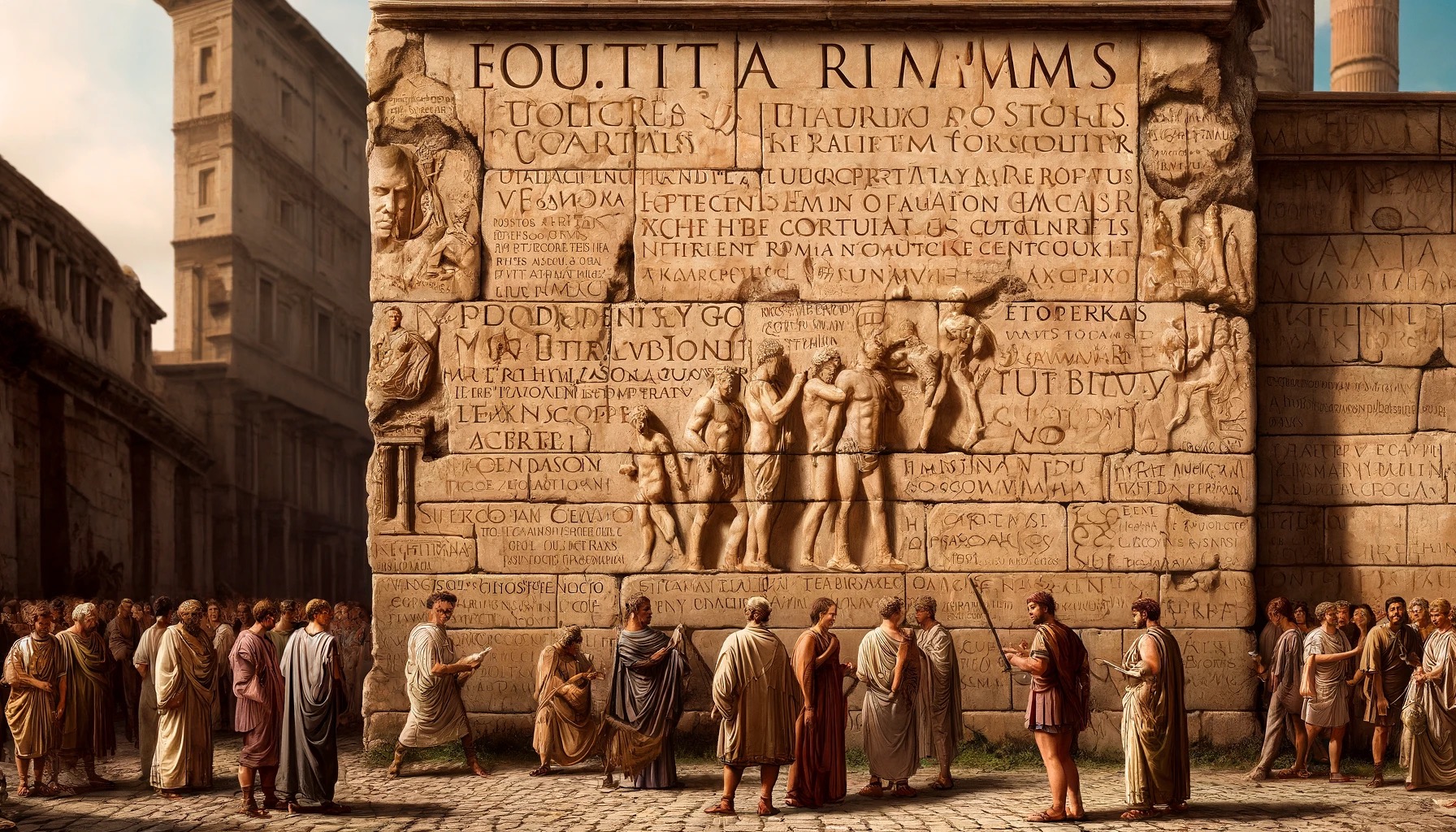
One of the more fascinating and lesser-known aspects of the Roman Empire is its use of graffiti as a form of communication and expression. Unlike the modern perception of graffiti as a rebellious act of vandalism, in ancient Rome, it was an everyday occurrence and served a multitude of purposes. These graffiti were etched into the walls of public buildings, private homes, and even in some of the most sacred spaces, such as temples and tombs. They offer a candid glimpse into the daily lives, thoughts, and humor of the Romans, far removed from the grandiose historical narratives of emperors and conquests.
The city of Pompeii, preserved by the eruption of Mount Vesuvius in 79 AD, provides a treasure trove of these ancient scribblings. Walking through the ruins, one can find messages ranging from political slogans, advertisements for gladiatorial games, and declarations of love, to more mundane notes like those complaining about the cost of bread or boasting about one’s prowess in bed. These inscriptions were often humorous, bawdy, and sometimes quite crude, revealing a side of Roman culture that is both relatable and surprisingly modern.
Roman Empire’s Peculiar Method of Communication: The Roman Graffiti
One famous example of Roman graffiti from Pompeii reads, “I screwed the barmaid,” reflecting the common and blunt expressions of daily life and personal conquests. Another inscription laments, “O walls, you have held up so much tedious graffiti that I am amazed that you have not already collapsed in ruin.” This particular piece of graffiti humorously critiques the sheer volume of messages that adorned the walls, showcasing the Romans’ awareness of their own habits.
In addition to personal messages, some graffiti also served commercial purposes. Shopkeepers would advertise their goods and services, while tavern owners would invite patrons to come in and enjoy their finest wines. Political messages were also prevalent, with supporters of different candidates leaving endorsements and sometimes derogatory comments about their opponents.
The preservation of these graffiti provides an invaluable window into the social fabric of Roman society. They illustrate the use of Latin in everyday contexts, the concerns and preoccupations of ordinary people, and the vibrant public discourse that took place in the streets of ancient cities. These inscriptions stand as a testament to the human need to communicate and leave a mark, a tradition that has endured through the centuries in various forms.
In essence, Roman graffiti showcases the everyday life of the empire, often overshadowed by grand historical events and figures. They remind us that history is not only shaped by the actions of the powerful but also by the ordinary voices that have managed to echo through time.
Money Doesn’t Stink: The Surprising Use of Urine in Ancient Roman Laundry
The Roman Empire, renowned for its monumental achievements and sophisticated society, also had its share of peculiarities. One particularly intriguing aspect of Roman daily life was their use of urine for laundry. Yes, urine was a valuable commodity in ancient Rome, particularly for its ammonia content, which made it an effective cleaning agent. Laundries, known as “fullonicae,” were commonplace in Roman cities, and they employed this rather unconventional method to clean and whiten clothes.
Urine was collected in public urinals strategically placed around the city, and it was then transported to the fullonicae where it was mixed with water. Workers, often slaves, would stomp on the clothes in large vats filled with this mixture to remove dirt and stains. This practice was so ingrained in Roman society that the Emperor Vespasian even imposed a tax on the collection of urine, famously justifying it with the phrase “pecunia non olet” – “money does not stink.” This not only provided revenue for the state but also highlighted the pragmatism and resourcefulness of Roman urban management.
Movies and TV Shows About Ancient Rome
Gladiator (2000)
This epic historical drama follows the story of Maximus Decimus Meridius, a betrayed Roman general who seeks revenge against the corrupt emperor Commodus by fighting as a gladiator.
Spartacus (1960)
This classic film tells the tale of Spartacus, a Thracian slave who leads a massive slave uprising against the Roman Republic.
Ben-Hur (1959)
Set in the 1st century AD, this iconic film follows Judah Ben-Hur, a Jewish prince betrayed and sent into slavery, who returns to seek revenge and redemption.
Cleopatra (1963)
This lavish epic chronicles the life of Cleopatra VII, the last active ruler of the Ptolemaic Kingdom of Egypt, and her relationships with Julius Caesar and Mark Antony.
Rome (2005-2007)
This HBO series provides a gritty, realistic portrayal of Rome’s transition from Republic to Empire, focusing on the lives of both historical figures and fictional characters.
I, Claudius (1976)
This acclaimed BBC series adapts Robert Graves’ novels, depicting the reigns of the Roman emperors from Augustus to Claudius, narrated by Claudius himself.
The Eagle (2011)
A historical adventure film about a young Roman officer who travels to Scotland to retrieve the lost Roman eagle standard of his father’s legion.
Quo Vadis (1951)
This epic film portrays the persecution of Christians under Emperor Nero, centering on the romance between a Roman commander and a Christian woman.
The Fall of the Roman Empire (1964)
A historical drama depicting the events leading to the decline of the Roman Empire, focusing on the reign of Emperor Marcus Aurelius and his son Commodus.
Pompeii (2014)
Set against the backdrop of the eruption of Mount Vesuvius, this action-romance film follows a gladiator’s attempt to save his love amidst the disaster.
Centurion (2010)
This film follows the story of a group of Roman soldiers struggling to survive behind enemy lines after their legion is decimated by Pict warriors in Scotland.
A.D. The Bible Continues (2015)
This miniseries explores the early days of Christianity, focusing on the events following the crucifixion of Jesus and the impact on the Roman Empire.
Empire (2005)
A miniseries dramatizing the aftermath of Julius Caesar’s assassination and the power struggle involving Octavian, Marc Antony, and Cleopatra.
Barbarians Rising (2016)
This docudrama series tells the story of the rise and fall of the Roman Empire from the perspective of various barbarian leaders who fought against Rome.
Agora (2009)
Set in 4th century Alexandria, this film follows the life of the philosopher Hypatia, focusing on the clash between scientific knowledge and religious dogma during the fall of the Roman Empire.
These movies and TV shows offer a diverse array of perspectives on Ancient Rome, from the grandeur of its empire to the personal stories of those who lived during its rise and fall.
Books About Ancient Rome
Rubicon: The Last Years of the Roman Republic by Tom Holland (2003)
A captivating narrative that chronicles the end of the Roman Republic, focusing on the political machinations and key figures like Julius Caesar and Cicero.
SPQR: A History of Ancient Rome by Mary Beard (2015)
An engaging and comprehensive account of Rome’s history, spanning over a thousand years, and exploring the lives of its citizens and rulers.
The Twelve Caesars by Suetonius (circa 121 AD)
A classic work that provides biographies of the first twelve Roman emperors, offering detailed and often scandalous insights into their lives and reigns.
The History of Rome by Livy (circa 27-9 BC)
A monumental history covering Rome’s founding to the reign of Augustus, emphasizing moral lessons and the valor of Rome’s early heroes.
Caesar: Life of a Colossus by Adrian Goldsworthy (2006)
A detailed biography of Julius Caesar, examining his military campaigns, political strategies, and enduring impact on the Roman world.
The Rise of Rome: The Making of the World’s Greatest Empire by Anthony Everitt (2012)
A vivid account of Rome’s ascension from a small city-state to a dominant empire, focusing on key events and figures that shaped its growth.
I, Claudius by Robert Graves (1934)
A historical novel presented as the autobiography of the Roman Emperor Claudius, detailing the intrigues and scandals of the Julio-Claudian dynasty.
The Decline and Fall of the Roman Empire by Edward Gibbon (1776-1788)
A seminal work that explores the reasons behind the fall of the Roman Empire, providing a thorough analysis of its decline over centuries.
The Annals of Imperial Rome by Tacitus (circa 109 AD)
A historical account of the Roman Empire from the death of Augustus to the end of Nero’s reign, known for its incisive analysis and dark portrayal of imperial Rome.
The Roman Revolution by Ronald Syme (1939)
An influential study of the transition from Republic to Empire, focusing on the rise of Augustus and the transformation of Roman political structures.
Carthage Must Be Destroyed: The Rise and Fall of an Ancient Civilization by Richard Miles (2010)
An exploration of the rivalry between Rome and Carthage, culminating in the Punic Wars and the eventual destruction of Carthage.
The War with Hannibal: The History of Rome from its Foundation by Livy, translated by Aubrey de Sélincourt (1965)
Livy’s detailed account of the Second Punic War, highlighting the strategies and battles between Rome and Carthage’s legendary general, Hannibal.
Roman Blood by Steven Saylor (1991)
A historical mystery novel featuring Gordianus the Finder, set in ancient Rome during the time of Cicero, blending historical events with a thrilling plot.
Augustus: The Life of Rome’s First Emperor by Anthony Everitt (2006)
A biography of Augustus, detailing his rise to power, his consolidation of the Roman Empire, and his lasting legacy.
The Gladiator: The Secret History of Rome’s Warrior Slaves by Alan Baker (2001)
An examination of the lives of Roman gladiators, their training, the brutal games they fought in, and their place in Roman society.
These books offer a rich and varied exploration of ancient Rome, from its legendary beginnings and political intrigues to the lives of its emperors and the epic battles that defined its history.