A used shipping container is one of the cheapest structures money can buy. A 20-foot box retired from ocean service goes for a couple of thousand dollars in most markets. The trouble starts the day it lands in the garden. It’s a steel shell with a plywood floor that has carried who knows what, doors built for forklifts, and walls that sweat the moment the weather turns cold.
Between that shell and a room you’d happily sit in all day there’s a whole trade. Openings get cut and framed, rust gets treated, floors get swapped, walls get insulated, wired and lined. Dealers already have a word for it. They call it refurbishment, and they price a refurbished unit well above an as-is one, because most of what the buyer pays for is the work.
RefurbishedContainers.com is the exact-match .com for that tier. It’s the phrase a buyer types once they’ve worked out that “used” isn’t enough.
Where the Money Sits
Container projects get sold on the box price and won or lost on everything after it. Anyone who has gone through a conversion quote line by line knows the shell is the small number (the site’s guide to reading a container conversion quote beyond the shell price walks through exactly that). Site access matters before anything is built, which is why what the delivery truck needs before the container arrives is a planning question and not an afterthought. Then come the details that decide whether a steel box is livable: condensation in the design brief, and the fact that the finished width is the dimension that matters once the walls are lined.
That’s why the name suits a business far better than a classifieds page. A regional refurbisher could build on it. So could a dealer with a conversion yard, a maker of modular garden studios, or a marketplace that inspects and grades units before sale. The word does part of the selling on its own. “Refurbished” tells a buyer the box has been checked and made good before it arrives. “Used” promises nothing.
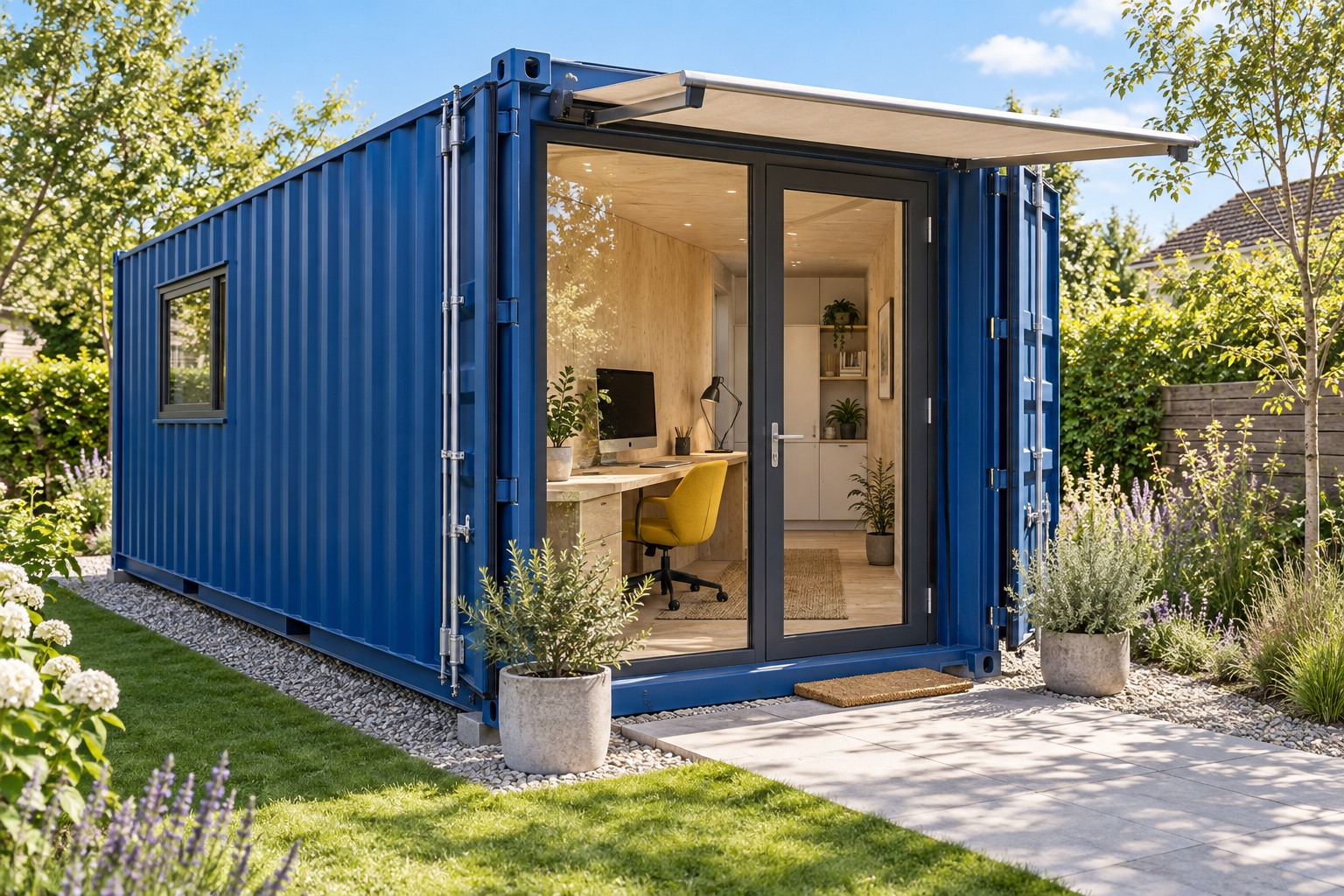
Demand keeps spreading from one use to the next. Garden offices came first, and a garden office that makes a shipping container worth converting is still the classic project. Now the same box turns up as a bicycle workshop built around the repair stand, a garden art studio, a small farm shop or a container cafe designed around the queue. Every one of those projects starts with a sound, prepared unit. That’s the product this name describes.
A Working Site Behind the Name
RefurbishedContainers.com isn’t a parked page. It already runs as a publication of original design concepts and planning guides, from choosing between a 20 foot and 40 foot container to two containers and the courtyard between them. It shows how much the name can carry, and how naturally it ranks for the questions buyers ask before they spend.
The audience overlaps with people rethinking where they work. Someone weighing a container in the garden is often the same person reading about home office design that starts with the working day on HomePremise.com, because the decision is the same one: where does the working day actually happen?
Few trades get a .com that is simply their own job description.